Confiscating the Commons, part 2: The Androidification of Open Source
by Ploum on 2026-11-24
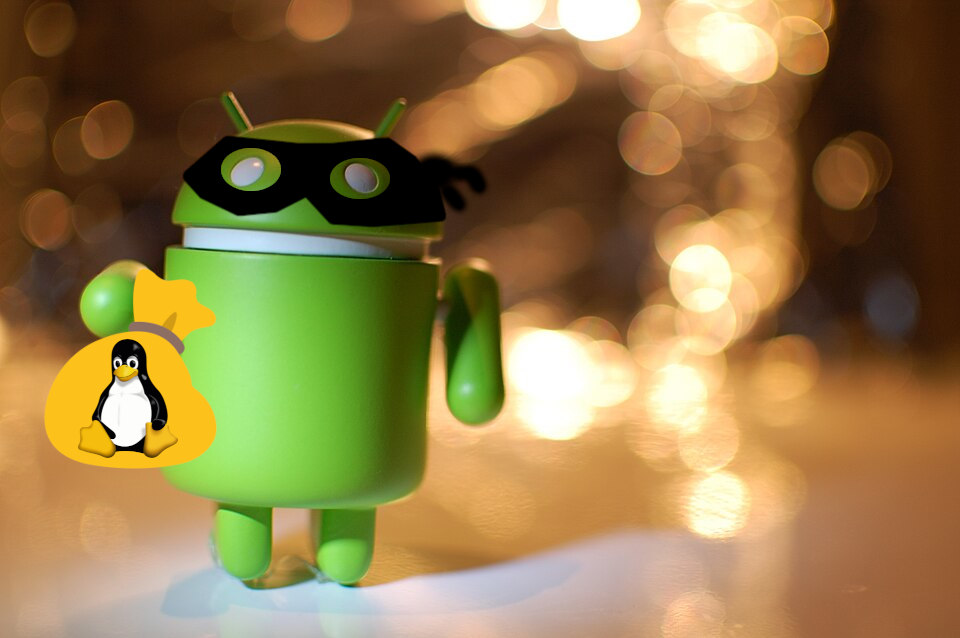
Free and Open Source software are part of our commons. But those commons have been confiscated through a process I call "Androidification". Androidification allows monopolistic corporate entities to benefit from the Open Source commons at very little cost while killing competition, destroying freedoms and keeping users captive. A true monopolist wet dream.
In the early 2000s, despite a dominant position of Microsoft Windows, nerds that cared could install a free operating system on their computers. Sometimes, they could even be reimbursed the price of the pre-installed Windows. But, with Windows CE, Palm, Symbian and Blackberry, everybody foresaw that mobile computing platforms were the next big thing. For freedom lovers, all hopes were on the Maemo platform championed by Nokia.
The iPhone took everyone by surprise. Including Steve Jobs himself (who only designed it as an iPod with phone capabilities, not a tool that serious people would use as it lacked a keyboard). Given that success, Google understood that people didn’t really need a keyboard and adapted its Android prototype to remove it.
When the first Android phone came out, the Open Source and Linux aspects were heavily highlighted in the geek circles. Prototypes even circulated early at FOSDEM. Nokia was failing to deliver the promised Maemo phone. And, to be fair, it would not end well.
Could Google be the champion of our freedoms?
Google was cooler than Nokia. Google was heavily sponsoring Free and Open Source projects. Google was trying to get new developers interested in Open Source through the Google Summer of Code. Heck, Google even invited Open Source developers for trips in Mountain View, all expense paid (I went myself to Mountain View in 2009).
Android was nice. Android was Open Source exactly in the sense dreamed by Eric Raymond and Bruce Perens: a big open source foundation sprinkled with a few proprietary custom services on top.
But, as I explored the brand new Android platform, stuff seemed a little odd. Some choices were not really sound from a technical perspective. I had myself many questions about the multimedia framework. Why not use GStreamer? I received some answer about performances that were not really satisfactory.
It took me years to understand the real reason: GStreamer was under the LGPL copyleft license. At that point, I realised that, besides the Linux kernel, nothing in Android was copylefted.
Corporate lawyers, I thought. This didn’t seem that bad.
But, over the years, more and more features of the Android Open Source Project (AOSP) were subtly moved to proprietary components. Essential features were now linked to those proprietary components.
We believed we were using free software but, suddenly, we could not access our phone without a Google account. The open source part is now a decreasingly thin part isolating the copylefted Linux kernel from the Google proprietary system where you cannot even install software without Google’s agreement. Open Source versions of Android (LineageOS, GrapheneOS, …) need to reimplement more and more parts of the system while being unable to run an increasing number of Android apps.
Android had been a trap all along.
Apple’s Androidification playbook
Despite its name, Androidification had not been invented by Google. I’m sure you could find earlier instances. For example, Apple had been doing the same, although more openly and more quickly. MacOS (OS X, as it was known at the time), was heavily based on the Open Source FreeBSD merged with some design components from NeXT (which was itself relying on BSD).
This was made possible because there was no copylefted code in BSD. In facts, BSD people were happy to see their code used that way. And Apple never pretended to care about Open Source.
Nevertheless, I saw many of my free software fellows happily jump into the Apple frenzy with the excuse "It’s all UNIX and free software under the hood". The cage is golden, let’s fly in it!
The candid naivety of software geeks never ceases to impress me.
Is Canonical next?
To avoid any risk of legal liability, keys to a good Androidification are:
1. Avoid or remove any copylefted code from your platform
2. Make important features depend on centralised services you control.
3. Even better: requires an account on your proprietary platform
Andoidification is exactly what Canonical had been doing for years with Ubuntu. Keep only the GPL Linux at the heart while removing all the GNU copylefted tools. The similarity between Snap and the Google Play store is striking when you think about it that way. Will they try to resurrect the defunct online Ubuntu One account?
But, of course, you don’t replace 40-year-old tools without breaking the life of the people who really use those tools. Enshitification is a symptom on Androidification: stuff that works too well is now broken in order to be replaced by alternatives that can control you (and don’t get me started on how Snap is breaking everything everywhere)
How Androidification turned our code against ourselves
We now live in a vast proprietary software infrastructure which is every day harder to escape. This infrastructure is not only proprietary and making us pay for it, it is actively harming us. Making us addict, spying us, bombarding us with ads, denouncing us, stealing our elections.
We thought that some proprietary software was acceptable. We believed that Open Source mattered more than Free Software. As a consequence, we have lost all nearly all our online freedoms in the process. We lost our free will. We are losing the free Internet, which was probably the best tool we had to save our planet.
But the worst is that we, young idealist geeks, we contributed to that torment nexus. We wrote the code of our own demise.

About the author
I’m Ploum, a writer and an engineer. I like to explore how technology impacts society. You can subscribe by email or by rss. I value privacy and never share your adress.
I write science-fiction novels in French. For Bikepunk, my new post-apocalyptic-cyclist book, my publisher is looking for contacts in other countries to distribute it in languages other than French. If you can help, contact me!